
Diet After Gallbladder Removal in Pakistan: The Complete Post-Op Recovery Guide
Leaving the hospital after a cholecystectomy brings relief from gallstone pain, but the first home-cooked meal often brings a rude awakening. Many Pakistani patients discover that eating a single spoonful of mutton korma, a fried paratha, or even a milky cup of doodh patti triggers urgent cramping, severe bloating, and watery diarrhea within thirty minutes.
If you are navigating your diet after gallbladder removal in pakistan, you are not alone in this frustration. The sudden inability to digest traditional South Asian cuisine is both physically exhausting and emotionally distressing. Fortunately, your digestive tract can adapt. By understanding how your anatomy has changed and implementing targeted clinical gastrointestinal nutrition therapy, you can eliminate painful digestive distress and safely reintroduce your favorite traditional meals.
The Physiological Mechanism: Understanding the Bile Dilemma
To fix your post-operative digestion, you must first understand the structural shift inside your digestive tract. Before surgery, your liver produced bile continuously, and your gallbladder functioned as a dedicated storage reservoir. When you consumed a meal rich in fats—such as ghee-laden daal or fried samosas—your gallbladder contracted, releasing a concentrated surge of bile acids into the duodenum to emulsify and break down those lipids.
Following a cholecystectomy, you no longer possess a storage tank for bile. Instead, your liver drips dilute bile continuously and directly into the small intestine, regardless of whether your stomach contains food.
Consequently, your digestive system faces two distinct physiological challenges:
Fat Malabsorption: When you consume a heavy or moderately fatty meal, there is insufficient concentrated bile available to break down the lipid load. These unabsorbed fats pass directly into the colon, causing floating, foul-smelling stools, gas, and steatorrhea.
Bile Acid Diarrhea (BAD): When you are fasting or eating low-fat meals, continuous bile acids drip directly into an empty intestine. When these excess bile salts reach the large intestine, they stimulate the colon lining to secrete massive amounts of water and sodium. Clinical research indexed on PubMed categorizes this condition as cholecystectomy-induced bile acid diarrhea, a primary reason why many local patients experience sudden, urgent loose stools shortly after waking up or right after eating.
Adapting to this altered state requires a phased, intentional approach to dietary fat digestion without a gallbladder. You must allow your digestive tract time to recalibrate its bile flow.
Practical Desi Diet Protocol & Food Modifications
Standard Western recovery diets often recommend foods like canned tuna, turkey slices, kale salads, and blueberries. These suggestions are neither culturally practical nor readily accessible for the average Pakistani kitchen. Managing your recovery effectively means modifying familiar staples using smart, clinically sound preparation techniques.
Phase 1 (Weeks 1 to 4): The Ultra-Low-Fat Transition
During the first four weeks post-surgery, your liver and intestines are adapting to continuous bile flow. Your dietary fat must stay strictly below 15 to 20 percent of your total daily caloric intake, with no more than 3 grams of fat per single meal.
Dry Whole-Wheat Phulkas: Avoid maida (refined white flour) completely, as it slows gut motility and worsens postoperative constipation. Consume thin, freshly prepared whole-wheat rotis made strictly without any ghee or oil applied to the surface.
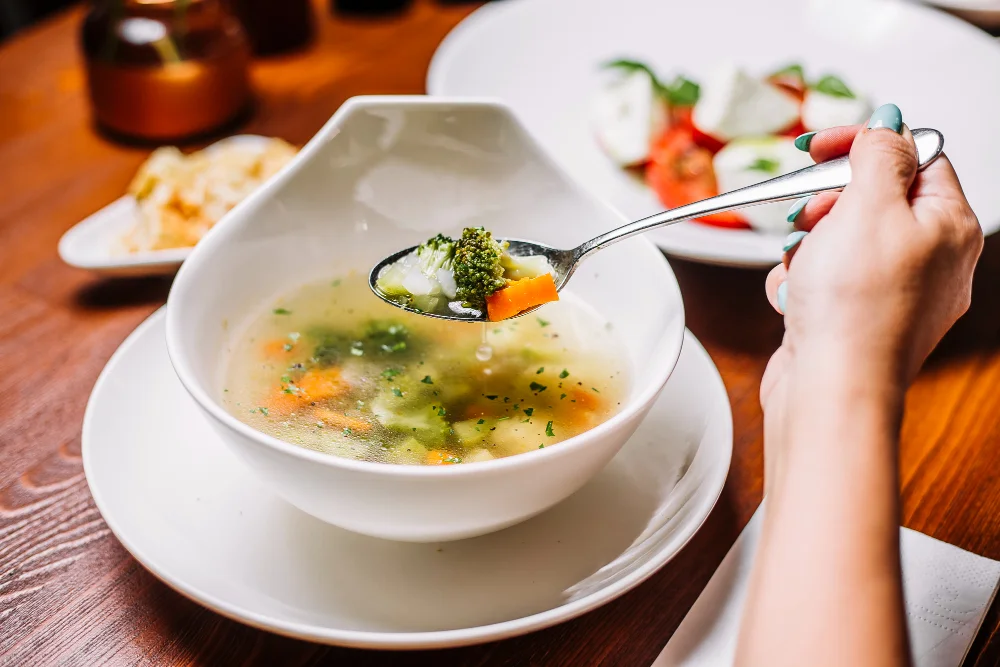
Fat-Skimmed Chicken Yakhni: Clear bone broth supports gut healing, but traditional yakhni contains excessive dissolved animal fats. Prepare chicken broth using skinless bone-in meat, refrigerate it overnight, and peel away the congealed fat layer completely before reheating and drinking.
Stewed Light Vegetables: Focus on soft, non-cruciferous, low-fiber gourds that are gentle on the digestive tract. Prepare dishes using peeled lauki (bottle gourd), tori (ridge gourd), tinda (apple gourd), and kaddu (pumpkin).
Boiled Egg Whites: Discard the yolk entirely during this initial phase. Egg yolks contain approximately 4.5 to 5 grams of concentrated fat per unit, which frequently triggers immediate gallbladder-bed spasms.
Phase 2 (Weeks 5 to 8+): Controlled Reintroduction & Fiber Titration
Once watery bowel movements stabilize, you can gradually increase soluble fiber. Soluble fiber binds to free-floating bile acids in your digestive tract, acting as a natural buffer that prevents bile salts from irritating your colon.
Ispaghol (Psyllium Husk): Take one level teaspoon of ispaghol stirred into room-temperature water 15 minutes before your two main meals. Never take it with cold milk during recovery. The soluble gel traps unabsorbed bile acids and adds bulk to loose stools.
Washed Moong Daal: Introduce thin, well-cooked yellow moong daal. Avoid heavier pulses like chana daal, mash daal, or whole lobia during early recovery, as their complex oligosaccharides cause severe fermentation and gas.
Lean Animal Protein: Reintroduce soft, boiled or steam-cooked skinless chicken breast and regional white fish (such as Rohu or Pomfret). Prepare fish steamed with lemon juice, carom seeds (ajwain), and turmeric rather than deep-frying it in oil.
The “Micro-Tarka” Method: Rebuilding Pakistani Salan
The biggest dietary trigger in Pakistani cooking is not the spices—it is the tarka. A conventional home-cooked curry begins with frying onions in half a cup of banaspati ghee or processed seed oil. This concentrated fat delivery overwhelms your post-cholecystectomy digestive tract.
To enjoy traditional salan without pain, use the Micro-Tarka Technique:
Dry-Roast Whole Spices: In a non-stick or heavy-bottomed stainless steel pan, dry-roast whole cumin seeds (zeera), crushed coriander seeds (sabut dhaniya), and carom seeds (ajwain) on low heat until aromatic. Dry-roasting releases natural volatile oils without adding dietary fat.
Water-Sauté the Gravy Base: Cook your minced onions, garlic, ginger, and peeled tomatoes using two to three tablespoons of warm water instead of cooking oil. Add water gradually to prevent scorching until the mixture softens into a smooth masala base.
The Single-Teaspoon Cap: Allocate a maximum of one level teaspoon (5 ml) of cold-pressed mustard oil or extra-virgin olive oil per single serving portion. Add this oil at the very end of cooking rather than boiling it for hours, which preserves its fatty-acid profile and drastically reduces digestive strain.
Clinical Food Swap Guide for Post-Cholecystectomy Care
Use this reference guide to navigate daily grocery shopping and dining choices across Pakistani households:
| Food Group | Foods to Prioritize (Safe & Healing) | Foods to Strictly Avoid (Diarrhea Triggers) |
| Breads & Grains | Dry whole-wheat phulka, plain boiled basmati rice, soft khichdi (moong + rice), plain unflavored oats | Parathas, puri, naan made with butter/ghee, roghni naan, commercial bakery rusk, and bakery biscuits |
| Meats & Proteins | Skinless chicken breast, boiled egg whites, steamed pomfret or rohu fish, thoroughly cooked yellow moong | Mutton, beef, nihari, paya, magaz (brain masala), organ meats, fried fish, chicken wings with skin |
| Vegetables | Boiled or lightly stewed lauki, kaddu, tinda, tori, peeled potatoes, and boiled carrots | Deep-fried pakoras, crispy fried bhindi, raw cabbage, cauliflower, raw onions, and roadside green salads |
| Dairy & Milks | Skimmed milk (0% fat), homemade low-fat curd/dahi prepared from skimmed milk, fresh lassi diluted with water | Buffalo milk with malai, commercial doodh patti, condensed milk, processed cheese slices, desi makhan, and khoya |
| Fats & Seasonings | Cold-pressed mustard oil (max 1 tsp/meal), dry-roasted zeera, ajwain, fennel seeds (saunf), fresh mint | Banaspati ghee, dalda, animal tallow, commercial mayonnaise, butter, packaged achar in oil |
| Beverages & Sweets | Fresh mint or fennel tea, clear yakhni, coconut water, plain room-temperature water | Karak chai with whole milk, commercial soft drinks, cream-based coffee, jalebi, gulab jamun, halwa |
Mid-Article Tool Integration
Managing your recovery is not just about avoiding fat; it is also about preventing unintentional, unhealthy weight loss or metabolic slowdown while your food choices are restricted.
Before introducing new food groups, calculate your BMI using Dr. Ikram’s interactive clinical tool. Knowing your exact maintenance needs ensures you consume enough protein and micronutrients without overloading your digestive system.
Medical Red Flags: When Diet Modification Is Not Enough
While mild digestive adjustments are a normal part of recovery, certain symptoms indicate secondary surgical or hepatic complications. Do not attempt to manage the following warning signs with home remedies or herbal drinks:
Persistent Acholic (Clay-Colored) Stools: If your bowel movements turn light grey or pale white, bile is failing to enter your digestive tract. This strongly suggests a biliary duct obstruction or retained stone.
Scleral Icterus or Jaundice: Yellowing of the whites of your eyes or your skin, especially when accompanied by dark, tea-colored urine, demands immediate clinical evaluation.
Severe Right Upper Quadrant Pain: While post-surgical soreness is expected, severe, sharp pain under your right rib cage that radiates to your right shoulder may indicate a retained bile duct stone (choledocholithiasis) or Sphincter of Oddi dysfunction.
Intractable Watery Diarrhea: Experiencing more than six to eight watery bowel movements per day for over two consecutive weeks leads to severe dehydration and electrolyte imbalances. In these cases, dietary adjustments alone are insufficient, and you may require a prescription bile acid sequestrant (such as Cholestyramine).
Take Control of Your Health: Book a Consultation with Dr. Ikram
Recovering from gallbladder surgery should not mean living in fear of your next meal or spending your days planning around bathroom access. Every digestive tract adapts at its own pace, and a generic diet sheet from a hospital discharge folder rarely addresses the realities of a Pakistani kitchen.
At Dr. Ikram’s Diet & Weight Loss Clinic, we design customized post-operative medical nutrition plans tailored to your specific recovery phase, daily routine, and metabolic profile. Whether you need to resolve persistent bile acid diarrhea, manage post-cholecystectomy weight fluctuations, or safely return to family dinners, expert guidance makes all the difference.
In-Clinic Consultations: Visit our specialized clinic in Karachi for a thorough physical and nutritional assessment.
Online Clinical Care: Access personalized consultations via WhatsApp from anywhere across Pakistan or abroad.
Schedule a personalized post-operative diet consultation today and reclaim comfortable, pain-free digestion.
Frequently Asked Questions
Can I ever drink traditional doodh patti again after gallbladder surgery?
Yes, but you must modify its preparation. Traditional Pakistani doodh patti uses whole-fat buffalo milk, which contains roughly 7 to 8 percent milk fat. That high fat concentration frequently triggers bile acid diarrhea. Wait at least six to eight weeks post-op, then prepare your tea using skimmed milk (0% fat) or low-fat dairy milk diluted with water. Avoid drinking it on an empty stomach.
Why do I have persistent diarrhea weeks after my cholecystectomy?
Without a gallbladder to store bile, your liver drips dilute bile acids into your intestines around the clock. When these bile salts reach your colon unabsorbed, they draw in excess water, triggering condition-specific bile acid diarrhea. This can typically be managed by restricting mealtime fats to under 5 grams, using psyllium husk before meals, and consuming smaller, more frequent dishes. If it persists, consult a physician for targeted medical therapy.
Is it safe to consume desi ghee in small amounts after surgery?
During the first six to eight weeks, avoid all forms of desi ghee, butter, and banaspati. Even small amounts of concentrated saturated animal fats require heavy emulsification that your continuous bile drip cannot handle. Once your digestion normalizes, you may cautiously test your tolerance with half a teaspoon of pure desi ghee mixed into hot food, but monitor your symptoms closely.
How long does it take for digestion to normalize completely?
For most patients, the small intestine and liver adapt to the missing gallbladder within three to six months. During this window, the intestinal lining improves its ability to reabsorb bile salts in the terminal ileum. Adhering to a structured, low-fat desi meal plan during the first eight weeks significantly speeds up this natural adaptation process.