
Pink Salt vs White Salt Blood Pressure: What Clinical Science Really Says
If you walk into almost any Pakistani kitchen today, you will likely find a jar of Khewra pink salt sitting proudly next to the stove. Many patients come to our clinic carrying a dangerous assumption: they believe swapping refined white table salt for Himalayan pink salt grants them immunity from hypertension.
When your physician diagnoses high blood pressure, hearing that you must cut back on flavorful curries, crispy pakoras, and seasoned daal feels overwhelming. Unfortunately, believing that pink salt can be consumed freely is driving silent vascular damage across South Asian households. In our preventative cardiology nutrition protocol, we emphasize that marketing claims must never replace clinical biochemistry.
Let us examine the exact relationship between pink salt vs white salt blood pressure regulation, the chemical reality of trace minerals, and how to protect your cardiovascular system while enjoying traditional home-cooked meals.
The Wellness Myth: Why Desi Households Misunderstand Pink Salt
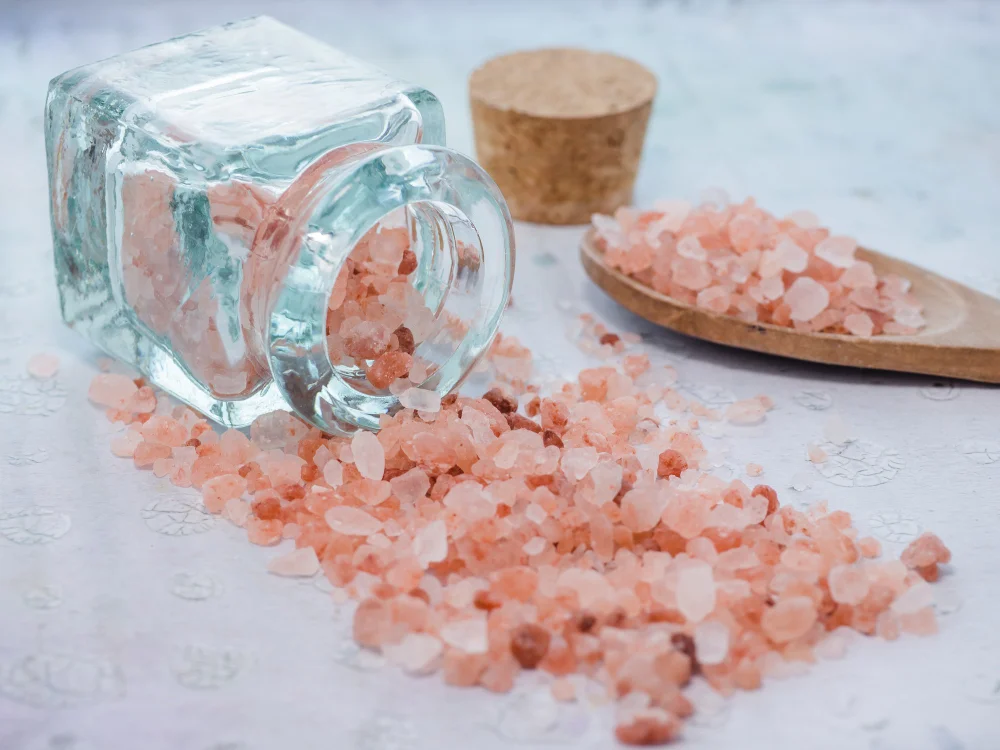
In Pakistan, Himalayan pink salt (lahori namak) and black salt (kala namak) carry an aura of ancient, organic purity. Wellness influencers often tout pink salt as an unrefined “superfood” packed with dozens of therapeutic minerals that supposedly lower blood pressure, soothe digestion, and balance bodily fluids.
Because it comes directly from the Khewra Salt Mine in Punjab rather than an industrial chemical refinery, people treat it like medicine. Consequently, family cooks frequently double the pinch added to daal, sabzi, or raita. After all, if it is natural, how could it hurt?
This cognitive bias creates a dangerous clinical outcome: the “health halo” effect. When patients switch to pink salt, their total daily sodium intake frequently increases because they stop measuring portions entirely.
The Biochemical Reality: Sodium Chloride Breakdown
Your kidneys and blood vessels do not care whether sodium arrives in a brilliant pink crystal or a bright white cube. Both varieties exert identical osmotic pressure on your arterial walls.
According to global dietary sodium guidelines for hypertension, controlling total sodium mass is the single most effective dietary intervention for lowering arterial tension. Chemically, common white table salt is roughly 99% pure sodium chloride ($NaCl$). Himalayan pink salt is approximately 96% to 98% sodium chloride.
┌────────────────────────────────────────────────────────┐
│             CHEMICAL REALITY: A DIRECT LOOK            │
│                                                        │
│   Refined White Salt:   ~99% Sodium Chloride (NaCl)    │
│   Himalayan Pink Salt:  ~97% Sodium Chloride (NaCl)    │
│                                                        │
│   The remaining 1-3% of pink salt consists of trace    │
│   iron oxide (giving it the pink hue), magnesium,      │
│   calcium, and potassium.                              │
└────────────────────────────────────────────────────────┘
The trace minerals responsible for that pink tint—predominantly iron oxide, calcium, and magnesium—exist in biologically negligible amounts. To obtain meaningful clinical quantities of potassium or magnesium from pink salt, you would have to consume grams of pure sodium daily. Doing so would provoke severe fluid retention, volume overload, and hypertensive crises.
Furthermore, standard commercial white salt in Pakistan is routinely fortified with potassium iodate. In contrast, crude pink salt contains minimal natural iodine. Replacing iodized salt entirely with unfortified pink salt can increase the risk of subclinical hypothyroidism, which slows metabolic rate and compounds weight gain.
The Danger of Overuse: Arterial Stiffness and Desi Cooking
Why does this biochemical detail matter so much in Pakistani homes? The answer lies in how our traditional meals are constructed.
Desi cuisine relies heavily on salt to balance rich, aromatic spices (garam masala, coriander powder, turmeric, red chili). When cooks believe pink salt is harmless, they season liberally during every cooking phase: marinating the chicken, simmering the salan base, and sprinkling extra raw salt over sliced cucumbers and tomatoes.
When high concentrations of sodium enter your bloodstream, water naturally follows via osmosis. This fluid retention expands your total circulating blood volume. As a result, your heart must pump harder against narrow arterial walls, dramatically elevating systolic and diastolic pressure. Over time, this sustained vascular resistance damages delicate capillaries in your kidneys, retinas, and brain.
Measuring Real Sodium Ceilings in Desi Kitchens
The WHO daily sodium intake limits recommend consuming less than 2,000 mg of sodium per day, which equates to roughly 5 grams of total salt—about one level teaspoon across an entire day.
In an urban Pakistani household where a single handi of chicken karahi or daal mash serves four to six people, the salt added to that central pot must cover everyone’s daily threshold. If the pot receives two heaped tablespoons of pink salt, every diner immediately exceeds their safe medical threshold in a single meal.
Practical Salt-Control Rules for Home Cooks:
Measure with standard spoons: Never toss salt using your fingers or palm. Use a level measuring teaspoon to track exactly what enters the pot.
Tarka modification: Spices like roasted cumin (zeera), crushed mustard seeds (rai), and carom (ajwain) provide immense aroma without adding a single milligram of sodium.
Acid over sodium: Use fresh lemon juice, amchur (dry mango powder), or a splash of apple cider vinegar right before serving. Acid activates the same taste receptors on the tongue that perceive saltiness, allowing you to cut actual salt content by 40% without sacrificing depth of flavor.
Avoid raw sprinkling: Ban table salt shakers—pink or white—from the dining table. Extra sprinkles over cooked rice or salad bypass cooking integration and deliver an unmitigated sodium spike.
Clinical Food Swap Guide for Blood Pressure
Managing hypertension in Pakistan does not mean giving up traditional meals. It requires replacing hidden sodium traps with potassium-dense, vessel-relaxing local whole foods.
| Food Category | Foods to Prioritize (Vasodilating & Low-Sodium) | Foods to Strictly Limit/Avoid (High-Sodium Drivers) |
| Grains & Roti | Single-grain whole wheat (chakki ka atta), jowar, or bajra roti made without added salt | Layered parathas kneaded with salt, restaurant maida naan, bakery sheermaal, rusk |
| Vegetables & Sabzi | Potassium-rich local produce: lauki (bottle gourd), bhindi, karela, tinda, tori, palak | Canned tomato purees, commercial vegetable pickles (desi commercial achaar) |
| Dairy & Fats | Skimmed fresh cow’s milk, low-fat homemade dahi (curd), limited cold-pressed mustard or olive oil | Commercial salted butter, processed cheese slices, full-fat buffalo cream, industrial ghee |
| Proteins & Daal | Split yellow moong daal, masoor daal, skinless country chicken, freshwater fish (Rahu, Mahseer) | Processed sausages, commercial seekh kabab mixes, dried/salted fish, canned chickpeas |
| Flavoring Agents | Fresh garlic, ginger root, green chilies, lemon juice, roasted whole zeera, fresh coriander | Soy sauce, commercial chicken powder, monosodium glutamate (MSG) seasoning cubes, chaat masala |
Calculate Your Baseline Health Metrics
Excess body mass multiplies the hypertensive effects of sodium. Even a modest 5% reduction in body weight significantly reduces peripheral vascular resistance and relieves burden on the heart.
Track Your Cardiometabolic Health
Before overhauling your spice cabinet, evaluate where your baseline weight and metabolic metrics stand. Use Dr. Ikram Clinic’s online BMI and metabolic health calculator to check your body mass index and establish an accurate daily calorie baseline.
Medical Red Flags: When Diet Adjustments Are Not Enough
While switching from excessive pink salt to monitored, minimal portions is essential, nutrition alone cannot manage acute or stage-2 hypertension. Do not attempt to treat severe blood pressure spikes with herbal teas or ispaghol husks.
Consult an emergency clinic or physician immediately if you experience:
Persistent morning occipital headaches (throbbing pain at the base of the skull)
Sudden blurry vision or visual field disturbances
Unexplained shortness of breath while resting or lying flat
Chest tightness, palpitations, or lightheadedness
Consistent home blood pressure readings exceeding 140/90 mmHg across three consecutive days
If your numbers remain elevated despite strict dietary salt restriction, your clinical team must evaluate your kidney function, serum electrolytes, and current antihypertensive prescriptions.
Take Control of Your Blood Pressure: Book a Consultation with Dr. Ikram
Treating hypertension requires an individualized balance of metabolic therapy, realistic dietary adaptations, and clinical oversight. You do not need to abandon your cultural heritage or eat bland boiled vegetables to achieve stable cardiovascular markers.
At Dr. Ikram’s Diet & Weight Loss Clinic, we design medically structured, evidence-based meal plans tailored directly to Pakistani pantries and family structures. Whether you manage borderline hypertension, post-infarction recovery, or stubborn weight retention, we formulate sustainable protocols that safeguard your arteries.
In-Clinic Consultations: Visit our specialized clinic in Karachi for comprehensive body composition analysis and physical clinical assessments.
Online WhatsApp Consultations: Access personalized, physician-led nutrition care from anywhere in Pakistan or abroad.
Take the decisive step toward lasting arterial health. Visit our appointment portal to schedule a clinical nutrition consultation or message our clinical team via WhatsApp today.
Frequently Asked Questions
Is Himalayan pink salt safe for kidney patients?
No. Patients with chronic kidney disease (CKD) have a reduced ability to excrete both sodium and potassium. Because pink salt contains unmeasured, variable trace minerals alongside pure sodium chloride, it can lead to erratic serum potassium spikes (hyperkalemia) and worsen fluid overload. Kidney patients must use strictly measured amounts of plain salt as directed by their nephrologist.
Does black salt (kala namak) raise blood pressure like pink salt?
Yes. Black salt is simply Himalayan rock salt transformed through high heat and mixed with spices and charcoal, yielding sulfurous compounds. Its foundation remains sodium chloride. While it contains subtle digestive properties recognized in folk tradition, its vascular effect is virtually indistinguishable from pink or white salt. It must be strictly counted toward your daily sodium limit.
Can drinking pink salt in warm water every morning detox the body?
No clinical evidence supports the trendy claim of “sole water” (pink salt dissolved in water). Drinking saline solution every morning introduces an unnecessary, concentrated bolus of sodium directly into your vascular tree. For someone prone to hypertension, this morning ritual can trigger sharp blood pressure elevations and tax the kidneys without offering any detoxification benefit.