
Leptin: Its Vital Role in Weight Loss
Hormones play a significant role in your body and the weight loss process. Often, we ignore hormones because we believe weight gain only depends on how much we eat. However, this is not always the case.
Many people gain weight due to underlying medical conditions or hormonal fluctuations. For instance, a thyroid hormone deficiency often leads to weight gain and lethargy. Consequently, changing your diet might not help until you fix the hormonal imbalance.
Similarly, a hormone called Leptin plays a crucial role in weight management. Understanding this hormone is essential for anyone struggling with their weight. Read on to learn how this “master hormone” affects your health.
What Is Leptin?
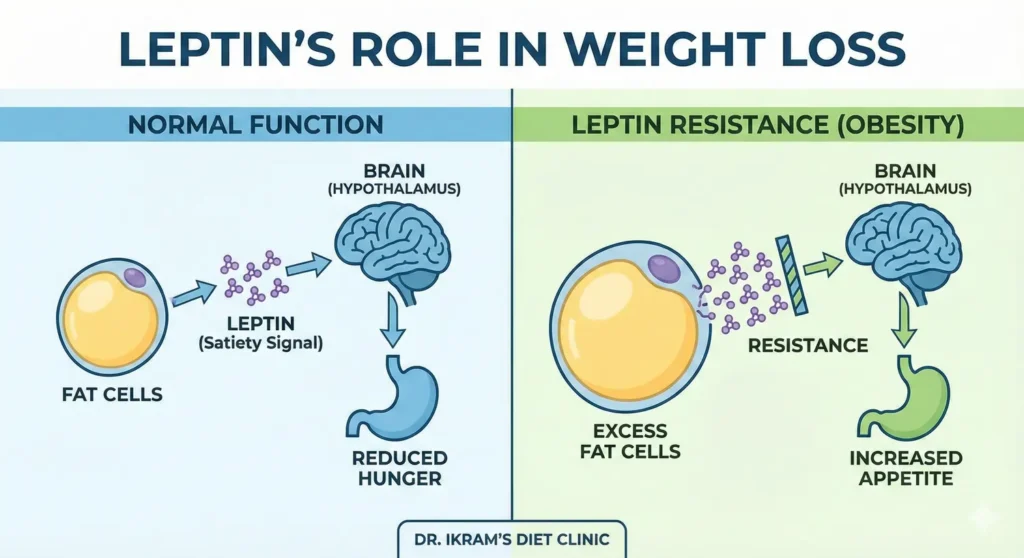
Leptin is a hormone produced by your body’s fat cells. It is primarily responsible for regulating your body weight and the hunger you feel. Therefore, experts often call it the “satiety hormone.”
This hormone manages how your body stores fat. Furthermore, it tells your brain when you have enough energy stored. This process helps you maintain a healthy balance between eating and burning calories.
How Does Leptin Affect Weight Loss?
Low levels of Leptin can create significant challenges for weight loss. If your levels decrease, you will likely feel extremely hungry. Consequently, this leads to overeating and inevitable weight gain.
When this happens, your appetite increases and your motivation drops. Additionally, you may experience a lower basal metabolic rate. This is problematic because your body burns fewer calories at rest, making weight management much harder.
Other Roles of Leptin
Leptin also influences your body temperature and overall energy expenditure. Since fat cells release this hormone, higher fat mass usually means more leptin in the bloodstream. Ideally, this should reduce your appetite to regulate weight.
However, you cannot rely on hormones alone. You still need strong willpower to achieve lasting results. While Leptin helps regulate signals, lifestyle choices remain a primary factor in your success.
Sending Signals to the Brain
Leptin functions by sending signals to your brain. It informs the brain that the body is not hungry and has enough fat storage. This negative feedback loop is vital for survival.
You should avoid starving yourself to lose weight. Starvation actually lowers your Leptin levels and spikes your appetite. Consequently, your brain thinks you are starving and triggers intense cravings.
The Problem of Obesity and Leptin Resistance
Obesity often leads to a condition called Leptin resistance. In this state, the body has plenty of fat and high hormone levels. However, the brain fails to recognize the signal.
Because the brain does not “see” the hormone, it thinks the body is starving. Therefore, it keeps sending hunger signals. This makes obese individuals feel hungrier and lazier, as the body tries to save energy.
Conclusion
Leptin is one of the most important hormones for weight control. Altered levels can lead to obesity and other metabolic issues. Therefore, you must maintain a healthy weight to keep your hormones balanced.
If you are struggling with weight management, professional help is available. Dr. Ikram’s Diet Clinic is a leading facility for fitness and weight advice. We provide safe, natural, and effective strategies to help you reach your goals.
To boost your SEO authority, I recommend linking to this resource from the National Institutes of Health (NIH): Leptin and the Regulation of Body Weight